Knowing how much weight a professional towing company can handle is essential when you’re dealing with a breakdown, an accident, or the transport of a large vehicle. The simple answer is this: Kzoo Towing Trucks can safely tow anywhere from small passenger cars up to heavy commercial vehicles weighing 75,000+ lbs, depending on the tow truck class we dispatch. Light-duty trucks handle everyday vehicles, medium-duty trucks support commercial vans and box trucks, and heavy-duty trucks manage large rigs, RVs, buses, and fully loaded semis.
Because every vehicle has a different weight, wheelbase, and loading requirement, the “maximum weight” isn’t just a single number—it’s a combination of safe lifting, stability, and proper truck selection. That’s why our team matches each towing request with the right class of equipment to ensure your vehicle is moved safely, efficiently, and without unnecessary strain. This article explains how towing capacity works, the different weight categories, and exactly how much weight we can tow across all vehicle types.
What Determines Towing Capacity in the Real World
The Factors That Influence How Much a Tow Truck Can Handle
A tow truck’s maximum capacity depends on several engineering components, including axle strength, hydraulic pressure, boom construction, winch rating, and braking capability. These elements work together to determine how safely the truck can lift, secure, and transport a vehicle under real-world conditions. The stronger the frame and lifting system, the higher the towing capacity and the safer the operation becomes.
Environmental conditions also influence real-world capacity. A heavy vehicle stuck in mud, positioned at an angle, or resting against a guardrail may require additional force or specialized equipment compared to the same vehicle on level ground. This is why towing companies always evaluate vehicle position, road surface, incline, and accessibility before deciding which truck to send.
A careful assessment ensures the selected equipment can support the load safely without causing frame distortion, shifting weight, or unstable movement. This combination of engineering and situational awareness is what determines how much weight a tow truck can safely handle in practice—not just on paper.
Why Tow Truck Classes Matter for Weight and Safety
Tow trucks are grouped into light-, medium-, and heavy-duty categories, each designed for a specific weight range. Light-duty trucks tow smaller vehicles, medium-duty trucks handle heavier work vehicles, and heavy-duty trucks support the largest rigs on the road. For a detailed breakdown of these classes, drivers can review our guide to Light-, Medium-, and Heavy-Duty Towing.
Each class has unique structural reinforcements, including stronger underlifts, multi-stage booms, and high-capacity winches. These features ensure that the weight is distributed safely and that the vehicle remains stable during loading and transport. Using the wrong class introduces unnecessary risk, which is why professionals always prioritize matching weight to equipment. You can see more about how our fleet is built for different loads on our Towing Capabilities page.
Proper class selection also prevents towing stresses that can affect braking, steering, and load balance. It ensures that both the tow truck and the vehicle being transported remain safe—even during long-distance hauls or in difficult conditions.
How Towing Companies Match the Right Truck to the Vehicle
Before dispatching a truck, towing operators consider vehicle type, weight, drive system, and position. This information helps determine the safest and most efficient towing method. Standard passenger vehicles often fall under light-duty towing, and drivers can learn more about this service through our Car Towing Service.
Operators also determine whether the vehicle needs wheel-lift towing, flatbed transport, underlift support, or winching. A lightly loaded delivery truck may use medium-duty towing, but if the same vehicle is heavily loaded, the safer choice is a heavy-duty truck with greater lifting stability and braking strength.
This matching process is what ensures towing capacity isn’t just adequate—it’s correct. When the right truck is dispatched, the entire operation becomes safer, faster, and more reliable, regardless of vehicle size or condition.
Weight Categories in Towing and the Vehicles They Cover
The Full Range of Light-Duty Towing and Typical Situations
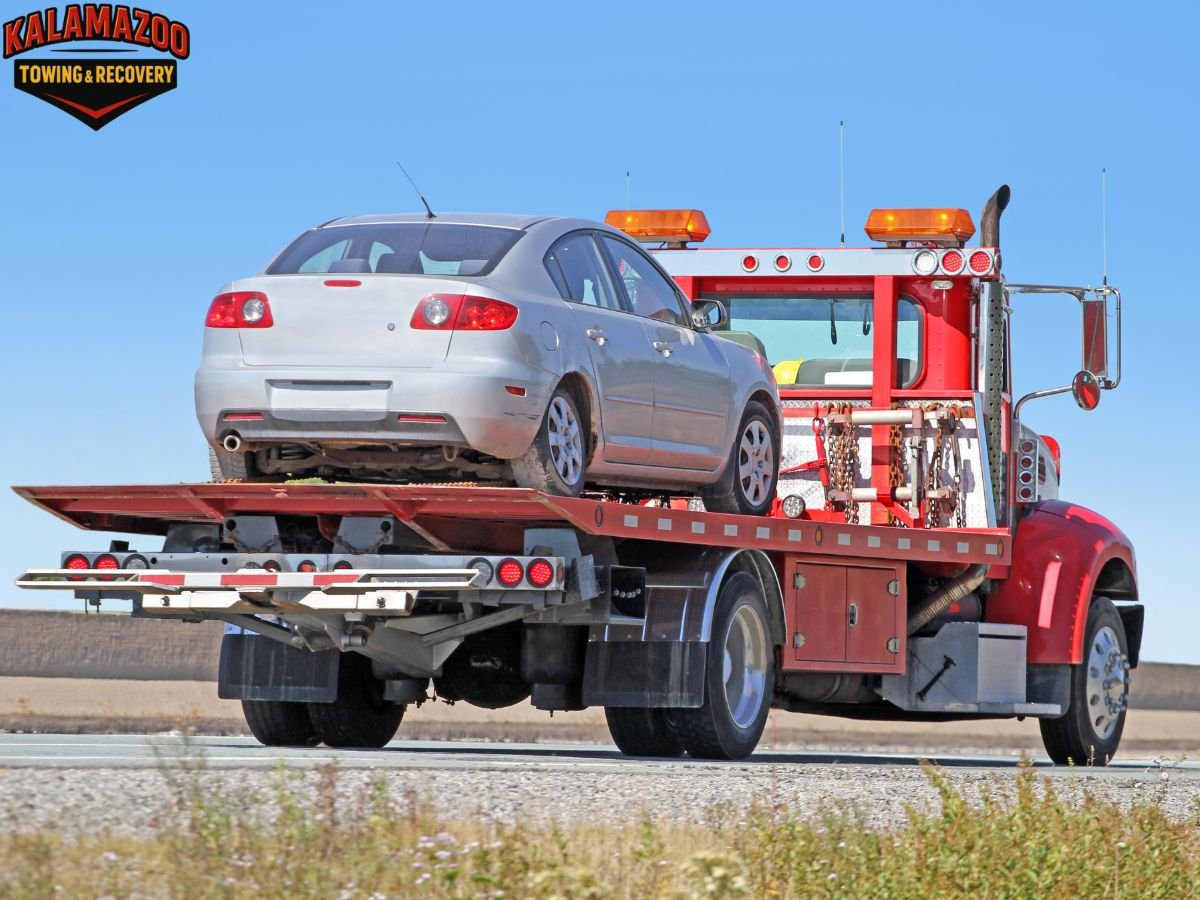
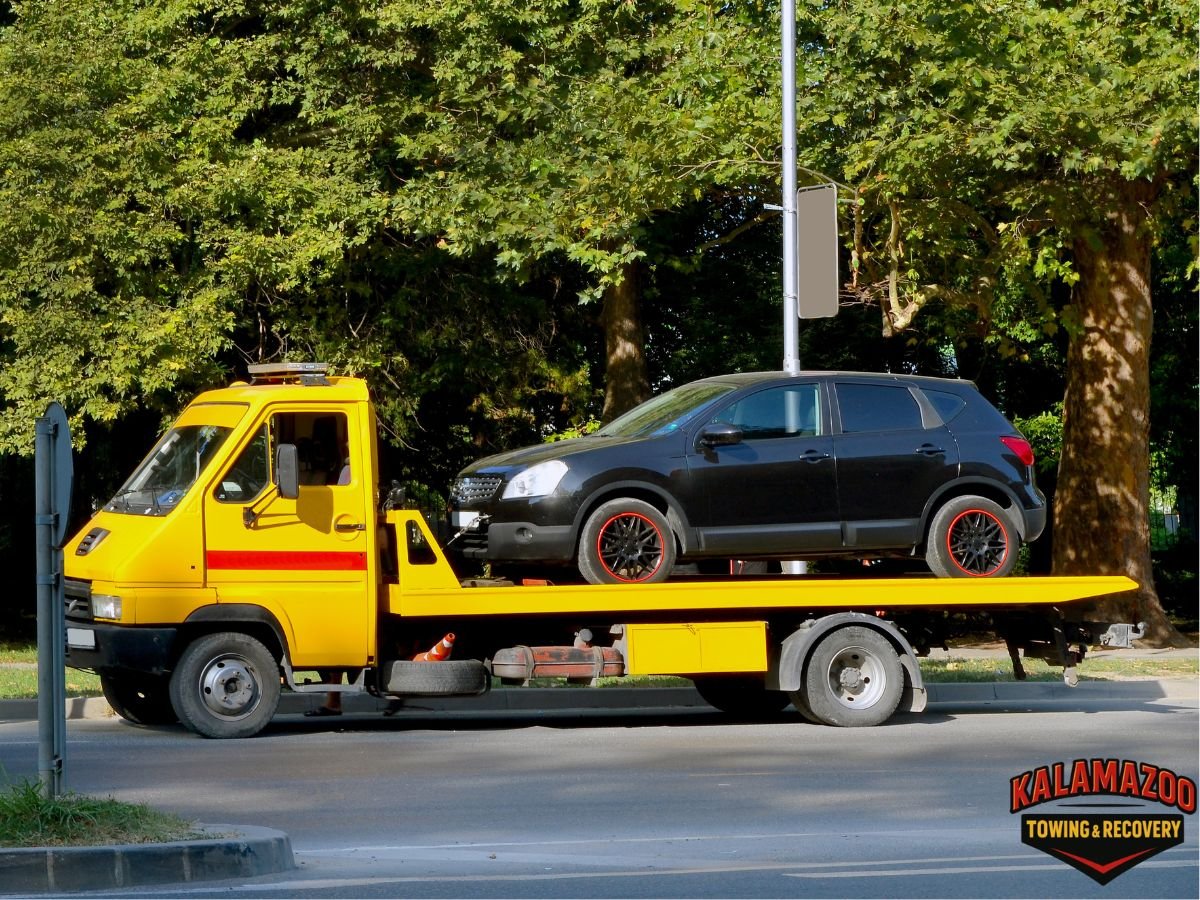
Light-duty towing covers vehicles up to 10,000 lbs, making it the most commonly used category for everyday breakdowns. Passenger cars, compact SUVs, crossovers, and motorcycles all fall within this weight range. These vehicles require lighter equipment, faster maneuverability, and towing methods that prevent damage to low-clearance or all-wheel-drive models. Drivers can review our light-duty capabilities here: Light-Duty Towing.
Light-duty units use flatbeds and wheel-lift systems to ensure controlled loading, especially in tight spaces such as residential streets or underground parking garages. Because the weight is lower, these trucks can access areas where larger tow trucks would struggle. This makes them ideal for roadside breakdowns, accident towing, and everyday transport needs.
Despite being the smallest class of towing equipment, light-duty trucks still undergo strict inspection and reinforcement to handle frequent, repeated calls. Their reliability and reach make them an essential part of any towing fleet, ensuring drivers receive quick and safe assistance for common vehicle issues.
Medium-Duty Towing for Heavier Work Trucks and Commercial Vehicles
Medium-duty towing supports vehicles weighing 10,000–26,000 lbs and is essential for commercial clients. This class includes box trucks, delivery vans, small buses, large pickup trucks, utility fleet vehicles, and lightly loaded transport trucks. These vehicles often carry equipment, tools, or cargo that adds weight, requiring stronger towing systems for stability. You can learn more about this category on our Medium-Duty Towing page.
Medium-duty tow trucks use reinforced booms, extended wheel-lift arms, and more robust hydraulic systems to maintain balance during lifting and transport. These features help operators manage vehicles with longer wheelbases or uneven weight distribution—a common challenge in the commercial sector. They also offer better control when maneuvering heavy vehicles in confined areas such as warehouses, loading docks, or narrow service roads.
This class bridges the gap between everyday towing and heavy equipment transport. It gives towing companies the flexibility to handle larger breakdowns without deploying the largest and most expensive truck in the fleet. For many businesses, medium-duty towing provides the capacity needed for reliable fleet support during emergencies or routine transport.
Heavy-Duty Towing for the Largest and Fully Loaded Rigs on the Road
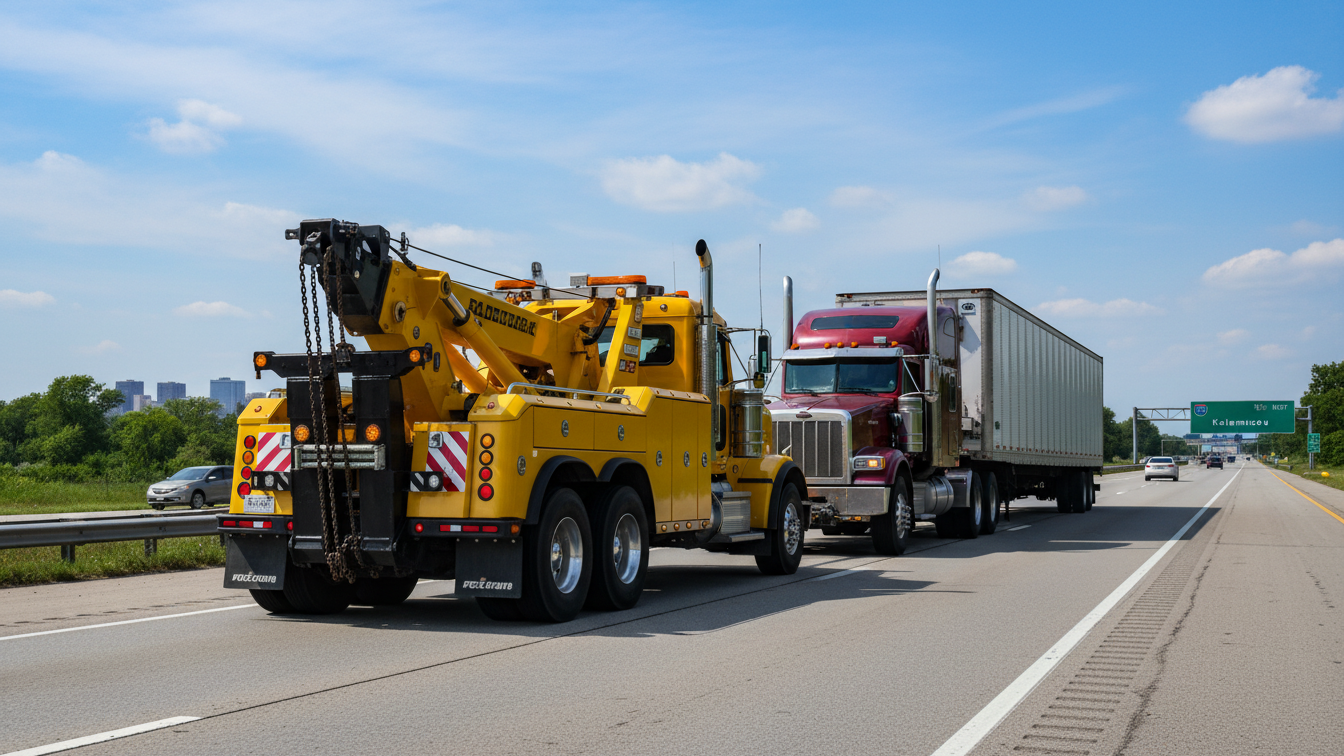
Heavy-duty towing is designed for vehicles weighing 26,000–75,000+ lbs, making it the strongest category in the industry. This includes semi-trucks, dump trucks, cement mixers, passenger buses, long-haul tractors, construction equipment, and fully loaded commercial rigs. Heavy-duty trucks feature multi-winch systems, hydraulic stabilizers, and high-capacity underlifts that safely manage extreme mass throughout the towing process. Drivers can explore these capabilities here: Heavy-Duty Towing.
These trucks are engineered for more than just weight—they’re built to control height, length, and multi-axle load distribution. Oversized vehicles often require strategic lift points and careful alignment to avoid damage during recovery or transport. Whether it’s a jackknifed tractor-trailer on a highway or a disabled bus that needs long-distance towing, heavy-duty equipment ensures stability and precise load management.
Because these vehicles are essential for transportation, logistics, and construction, the ability to tow them safely is critical. Heavy-duty towing allows companies to minimize downtime, recover vehicles after accidents, and complete long-distance hauls under controlled conditions. This class represents the highest level of towing strength and technical expertise available on the road today.
Maximum Weight Capacity Provided by Kzoo Towing Trucks
Our Full Towing Range From Passenger Vehicles to Commercial Fleets
Kzoo Towing Trucks provides towing for the entire spectrum of vehicle weights, from compact cars to large commercial fleets. Our light-duty units handle vehicles up to 10,000 lbs, including sedans, small SUVs, motorcycles, and crossovers. These trucks offer quick response, accessibility in tight areas, and controlled loading for delicate or low-clearance vehicles. For everyday passenger towing, details are available on our Car Towing Service page.
For vehicles weighing 10,000–26,000 lbs, such as work trucks, delivery vans, and cargo vehicles, our medium-duty fleet provides added lifting strength and stability. These units manage heavier chassis and longer wheelbases with reinforced underlifts and high-capacity hydraulics. This category is essential for commercial and fleet clients who rely on consistent, safe support.
This wide range ensures we can respond to almost any breakdown scenario. By dispatching the correct class of equipment, we protect both the tow truck and the customer’s vehicle while maintaining full safety throughout the towing process. Whether the vehicle is disabled, lightly damaged, or stuck in a challenging location, we assign the appropriate truck to match the exact weight and condition.
Heavy-Duty Strength for Oversized, Loaded, and Specialized Vehicles
For vehicles weighing 26,000–75,000+ lbs, our heavy-duty division delivers the power needed to tow the largest equipment on the road. This includes semi-trucks, charter buses, large RVs, dump trucks, and fully loaded trailers. These tow trucks feature multi-winch systems, hydraulic stabilizers, and high-strength underlifts capable of managing extreme mass with precision. Our full service is outlined here: Heavy-Duty Towing.
Heavy-duty operations often involve complex recoveries such as jackknifed tractors, overturned rigs, or vehicles stuck on soft shoulders. In these situations, strength must be combined with precise control and proper rigging. For extraction or repositioning, customers can rely on our Vehicle Recovery Service and Winch-Out Service.
Our heavy-duty operators specialize in managing multi-axle vehicles, loaded trailers, and high-center-of-gravity equipment without compromising safety. They use industry-standard rigging techniques, lift calculations, and stabilization equipment to prevent shifting loads or secondary damage. This expertise allows us to move some of the heaviest vehicles on Michigan roads with confidence.
How We Ensure Safe Loading, Transport, and Recovery for All Weights
Safety is the foundation of every tow we perform. Before loading any vehicle—whether it weighs 3,000 lbs or 70,000 lbs—our team verifies its weight, condition, and structural integrity. This helps determine the correct lift points, towing angle, and equipment selection. When vehicles require specialized loading, we rely on systems described in our Flatbed Towing and Wheel-Lift Towing
services.
For commercial or heavy equipment towing, operators follow strict protocols to ensure controlled movement and secure attachment. This includes monitoring axle pressure, stabilizing the load, and using safety straps and chains to prevent shift during transport. These steps maintain stability and reduce risk throughout the journey.
All tow trucks in the Kzoo Towing Trucks fleet are GPS-tracked, fully insured, and operated by trained professionals who understand weight limits, loading behavior, and safe towing procedures. Whether the situation involves a small roadside breakdown or a large commercial recovery, the right equipment and method are used every time. For immediate support or to confirm exact towing requirements, customers can reach us through our Contact page.
Conclusion
Understanding how much weight a towing company can safely handle is essential when choosing the right service for a breakdown, accident, or transport need. With a fleet that spans light-, medium-, and heavy-duty tow trucks, Kzoo Towing Trucks is capable of towing vehicles ranging from compact cars to fully loaded commercial rigs weighing over 75,000 lbs. This wide capacity ensures drivers and businesses always receive properly matched equipment for their situation.
By evaluating vehicle weight, loading conditions, and road factors before dispatching a truck, our team ensures that every tow—large or small—is completed with precision and safety. Whether you need standard towing, heavy-duty support, or specialized recovery, our capabilities allow us to handle nearly any vehicle on Michigan roads.
If you’re ever unsure which category your vehicle falls into or how much it weighs, our team is always available to guide you. With 24/7 service and a full range of tow truck classes, Kzoo Towing Trucks is prepared to get you moving again with confidence.