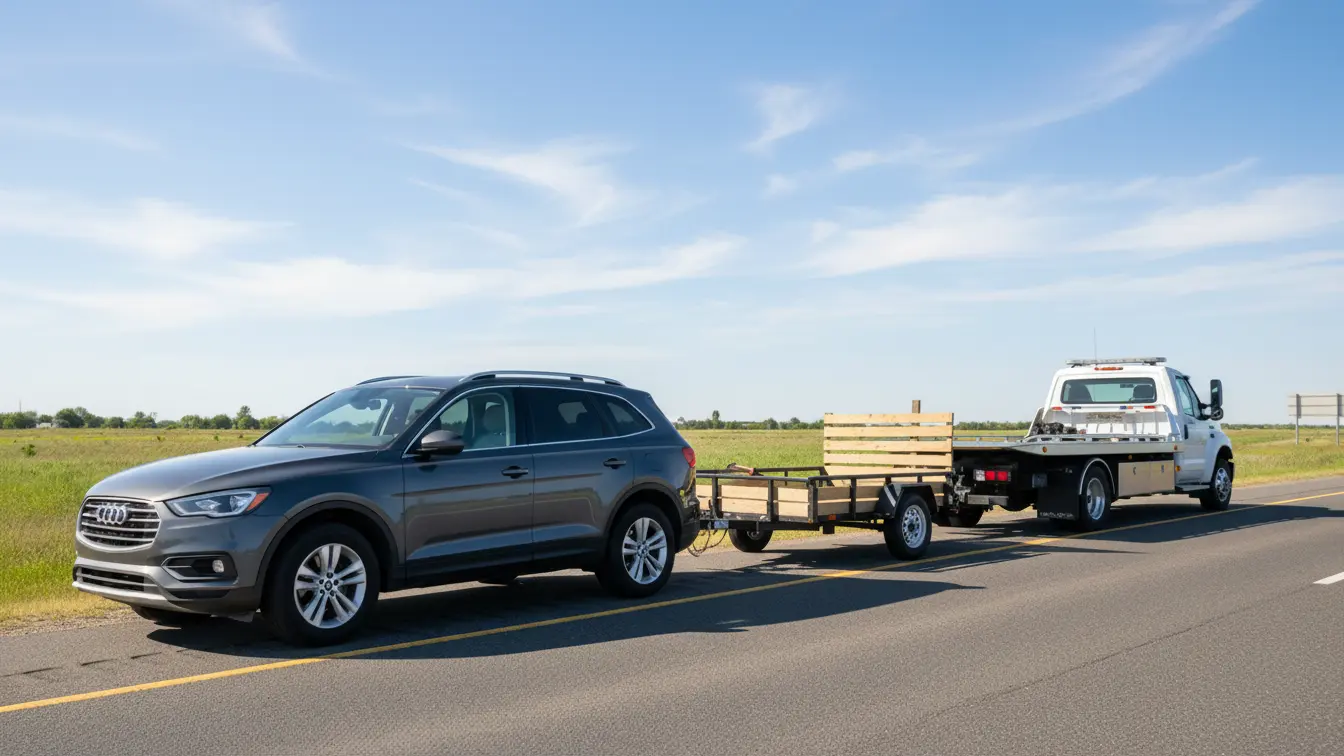
When a vehicle breaks down while pulling a trailer, most drivers are unsure how a towing company can respond safely. It’s a challenging situation because the vehicle and trailer act as a single extended load, and not every scenario allows both units to be towed together. The short, direct answer is: yes—Kzoo Towing Trucks can tow a vehicle that’s still attached to a trailer, but only when the combined load and hitch stability meet safe operating conditions. If the setup is unstable or too heavy, we disconnect the trailer and tow each unit separately.
Because this situation involves more technical considerations than normal towing, understanding the limits, safety conditions, and our professional approach can help you know exactly what to expect during a trailer-related breakdown.
Can a Towing Company Tow a Vehicle That’s Pulling a Trailer?
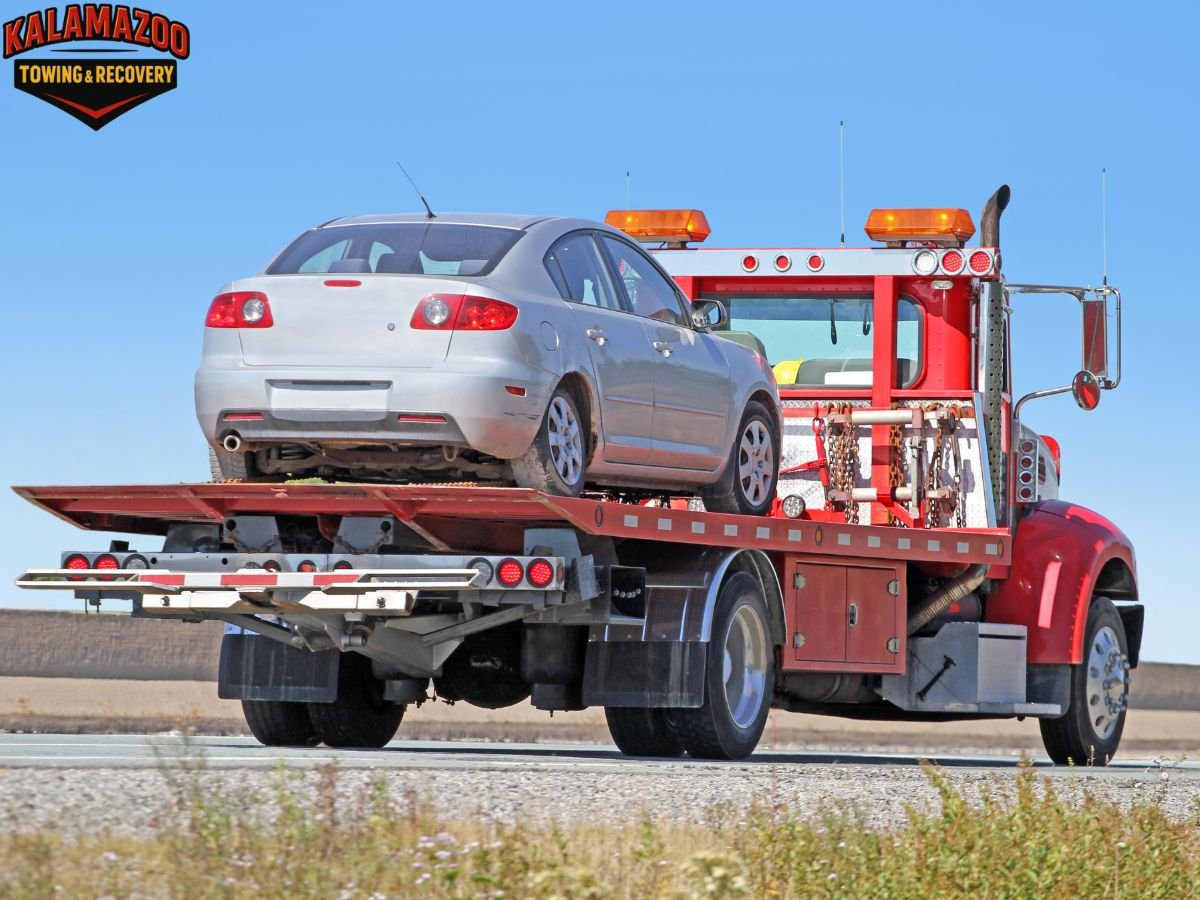
Towing both units together is possible in some cases, but only when the combined load falls within the safe operating range of the tow truck dispatched. For example, a lighter setup may be manageable with one of our service trucks used for light-, medium-, and heavy-duty towing. If the combined weight is too heavy or the setup exceeds safety limits, our team switches to a separated towing approach to protect the vehicle, trailer, and towing equipment.
There are also situations where towing both connected is unsafe or not permitted. If the trailer hitch is bent, unstable, or damaged during the breakdown, attempting to tow both together could cause swaying or detachment. In scenarios where the trailer or towing vehicle is stuck or positioned awkwardly, we first stabilize and reposition the units using techniques outlined in our vehicle recovery service. Weight distribution also plays a major role. A combined load approaching commercial ranges may require a larger unit from our heavy-duty towing fleet
to ensure safe lifting and controlled transport. Only when all safety standards are met do we tow both vehicle and trailer together.
Key Factors That Determine Whether Double Towing Is Safe
The first deciding factor is the total weight of the vehicle plus the trailer. Operators must confirm whether the combined load fits within the maximum capacity of the assigned tow truck. When heavy trailers, equipment haulers, or multi-axle setups are involved, a specialized truck from our
heavy-duty towing division is used to avoid overloading smaller units.
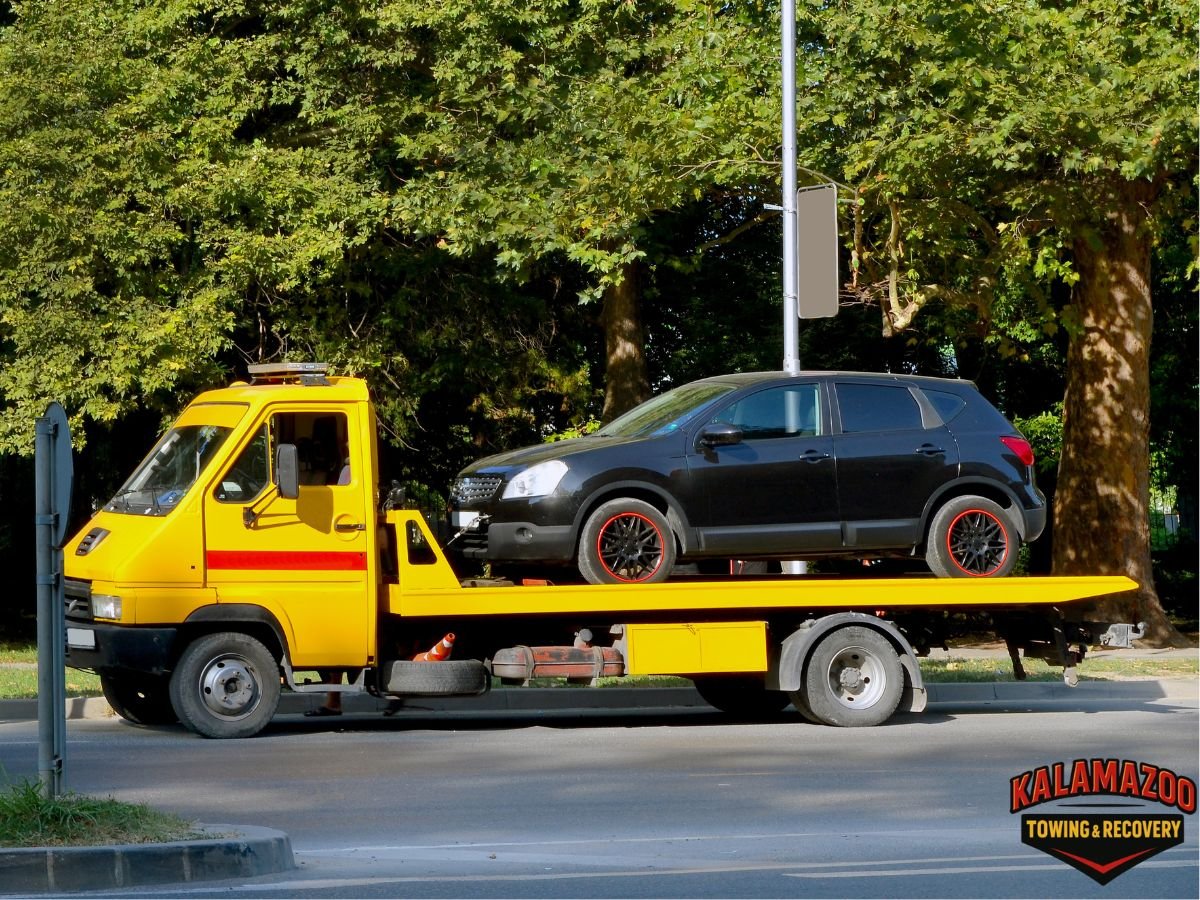
The condition of the trailer hitch is equally important. A weak or damaged hitch makes combined towing unsafe. In these cases, the safest solution is to disconnect the trailer and secure it separately using our flatbed or wheel-lift equipment found under flatbed towing and wheel-lift towing.
Environmental conditions also affect the decision. If the trailer is stuck in mud, resting at an angle, or positioned in a difficult area, operators use controlled recovery techniques to extract or re-align both units. Situations like these often involve slow, steady pulling using our winch-out service before the actual towing begins. Once everything is stable, we determine whether towing both units together is safe.
How Professionals Handle Towing a Vehicle With a Trailer Attached
Professionals begin by checking whether the vehicle and trailer can remain connected. If the weight is appropriate and the hitch is secure, we can tow both units together using equipment selected from our light-duty or medium-duty trucks. This method is efficient when the load meets all safety criteria.
When combined towing isn’t safe, the team separates the trailer and prepares both units for individual transport. The vehicle may be loaded onto a flatbed, while the trailer is handled with a wheel-lift or secondary support system. For larger or loaded trailers, we assign a specialized unit from our heavy-duty towing section to ensure proper weight distribution.
If the towing vehicle or trailer is stuck, angled, or obstructed, trained operators perform a recovery procedure first. This may involve repositioning, stabilizing, or freeing the unit using equipment described in our vehicle recovery service. Only after stabilizing all components do we tow the vehicle and trailer safely.
How Kzoo Towing Trucks Handles Trailer-Involved Breakdowns
When we are called to assist a vehicle that’s towing a trailer, our team follows a proven safety-first process. We start by inspecting the hitch, the weight distribution, and the surface conditions. If everything is stable, and the total load fits within the safe limits of the responding truck, both units can be moved together. For everyday breakdowns involving passenger vehicles, customers can learn more through our car towing service.
If the trailer is too heavy or the hitch is compromised, we separate the units and secure each independently. Our flatbed and wheel-lift equipment—outlined in our flatbed towing and wheel-lift towing pages—ensure both the vehicle and trailer remain stable in transit.
For commercial setups, loaded trailers, or long-wheelbase rigs, our heavy-duty team handles the entire recovery using equipment built for oversized loads. Details for these jobs can be found under heavy-duty towing. Regardless of the complexity, we ensure the safest and most controlled approach. Drivers facing trailer-related breakdowns can get immediate assistance by contacting us through our contact page.
Conclusion
Yes—we can tow a vehicle that’s still attached to a trailer, but only when the combined load, hitch condition, and road environment allow it. When towing both connected isn’t safe, we separate the units and move each independently using the appropriate equipment. This ensures full control, stability, and protection for both the vehicle and the trailer.
Our team is trained to evaluate weight distribution, terrain, hitch integrity, and towing limitations before deciding on the safest method. With a full fleet covering light-, medium-, and heavy-duty operations—plus recovery solutions for stuck or unstable trailers—we’re equipped to handle nearly any roadside situation involving a trailer.
Drivers in Kalamazoo and surrounding areas can reach us anytime through our contact page for help, guidance, or immediate towing support.